Yes, a well can run low or stop keeping up during a drought. Long dry periods reduce groundwater recharge, while summer water use often increases. A shallow or lower-yield well may show the effects sooner, but drought is not the only reason a home loses water.
A pump problem, pressure tank issue, control failure, broken water line, clogged filter, or electrical problem can look like a dry well. TLC Well Service checks the complete system so homeowners get the repair they actually need.
How drought affects a private well
A private well draws groundwater stored below the surface. Rain and snowmelt help replenish that supply over time. During a drought, less water reaches the ground, and the water level available to a well may fall.
The well may still contain water but refill more slowly than the pump removes it. When household demand is greater than the recovery rate, pressure may drop, air may enter the line, and water may stop until the well has had time to recover.
Which wells are more likely to struggle?
Every well and property is different. A well may be more affected during dry weather when it is shallow, has a lower recovery rate, serves a home with high peak demand, or has a pump set close to the changing water level. Age, wear, mineral buildup, and other system problems can make the symptoms worse.
Nearby groundwater use can also affect local conditions. A professional evaluation is the only reliable way to tell how much of the problem comes from drought and how much comes from the equipment.
Signs a well is struggling during dry weather
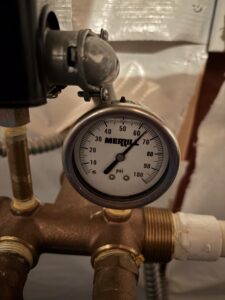
- Water pressure drops during normal household use
- Faucets sputter or spit air
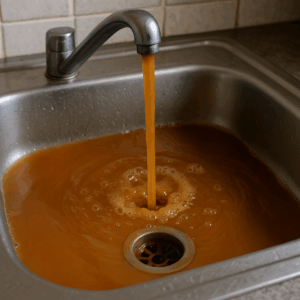
- Water becomes cloudy, sandy, rusty, or muddy
- The pump runs longer or cycles differently than usual
- Water returns after a quiet period but fades again during heavier use
- The pattern becomes worse as dry conditions continue
These signs can also come from a failing pump, pressure equipment, controls, a leak, or restricted flow. Read Signs Your Well Is Drying Up—and What Else It Could Be for a closer comparison.
What to do if water pressure drops during a drought
- Pause nonessential water use. Stop irrigation, repeated laundry loads, long showers, and other high-demand activities.
- Spread necessary water use throughout the day. Avoid running several water-using appliances at the same time.
- Do not keep resetting a breaker. If it trips again, the pump or electrical system needs professional service.
- Do not open electrical controls or a pressurized tank. Leave system testing to a trained well professional.
- Call before the home loses water completely. Early testing can help protect the pump and identify a developing equipment problem.
Will rain fix a drought-affected well?
Rain can help groundwater recover, but the change is not always immediate. Water must move through soil and rock before it reaches the aquifer that supplies the well. One storm may not reverse a long dry period, and the timing varies from one area and well to another.
If the system repeatedly loses pressure or water, do not wait for weather alone to solve it. A pump that keeps operating under poor conditions can suffer additional wear.
How TLC checks a drought-related water problem
TLC starts with the pattern you noticed and checks the parts most likely to cause it. That can include pump operation, water delivery, pressure tank and controls, the well head and fittings, water lines, filters, and treatment equipment.
We show you what we find and explain the practical options before work moves forward. Depending on the cause, the system may need a repair, pump or pressure equipment service, maintenance, better pump protection, or a properly selected water tank that supports the home’s water needs.
How to prepare for future dry periods
- Schedule a private well inspection each year
- Repair leaks promptly
- Address changes in pressure, cycling, sound, color, taste, or odor early
- Spread high-demand water use throughout the day
- Ask TLC whether pump protection or a water tank fits the existing system
For a general explanation, read Can a Home Well Run Dry? If water has already stopped, see If a Well Runs Dry, Will It Fill Back Up? or visit TLC’s No Water Emergency page.
Have your well checked before a drought becomes a no-water emergency
TLC Well Service helps homeowners across St. Joseph, Elkhart, Marshall, La Porte, and Kosciusko counties with well repair, pump service, pressure equipment, water tanks, inspections, water lines, and water-quality support.